
Quick Answer
An EICR is used to assess the safety and condition of your property’s electrical installation. Homeowners may need an EICR when buying an older property, planning renovation work or after recurring electrical faults, while landlords are legally required to have rental properties inspected at least every five years.
Whether you are buying a property, upgrading outdated electrics or renting out a home, an EICR inspection helps identify electrical safety issues before they become more serious or costly.
What Is an EICR and Why Does It Matter?
An EICR stands for Electrical Installation Condition Report. It is a professional inspection used to assess the condition and safety of the electrical installation within a property.
During the inspection, an electrician checks areas such as the consumer unit, wiring, earthing, bonding and electrical circuits to identify wear, damage or installations that no longer meet current safety standards.
Many homeowners across Kenilworth and Warwickshire only think about electrical inspections once problems start appearing. However, electrical systems naturally deteriorate over time, particularly in older properties or homes that have had multiple alterations carried out over the years.
An EICR helps identify issues early and provides reassurance that the installation is safe for continued use.
1. Landlords Legally Need Regular EICRs
For rental properties in England, landlords are legally required to have the electrical installation inspected and tested at least every five years.
This falls under the Electrical Safety Standards in the Private Rented Sector Regulations 2020. A copy of the EICR must also be provided to tenants and supplied to local authorities if requested.
If faults are identified during the inspection, remedial work may need carrying out within a specified timeframe depending on the severity of the observations.
For landlords, regular inspections are not only about compliance. They also help identify ageing wiring, overloaded circuits or damaged accessories before they create larger maintenance issues later.
2. Older Properties Often Benefit From Electrical Inspections
Many older homes across Warwickshire still contain electrical installations that were never designed for modern electrical demands.
Properties built decades ago may still have:
- outdated fuse boards
- ageing wiring
- insufficient socket outlets
- inadequate earthing arrangements
In some cases, previous alterations may also have been carried out poorly or without proper certification.
An EICR helps identify whether the installation remains safe and whether upgrades such as a consumer unit replacement or partial rewire may now be advisable.
3. Buying a House Is a Common Time to Arrange an EICR
Homebuyers often arrange surveys for the structure of a property but overlook the condition of the electrics.
An EICR can be particularly useful when purchasing:
- older homes
- renovated properties
- homes with extensions
- properties showing signs of DIY electrical work
While a standard homebuyer survey may flag visible electrical concerns, it will not involve detailed testing of the installation itself.
An EICR provides a clearer understanding of whether the property may require electrical upgrades or safety improvements after purchase.
4. Recurring Electrical Problems Shouldn’t Be Ignored
Frequent electrical issues are often a sign that the installation should be assessed professionally.
Examples can include:
- circuits tripping regularly
- flickering lights
- burning smells near sockets
- buzzing consumer units
- damaged accessories
In some cases, the issue may be relatively straightforward. In others, the underlying problem may relate to ageing wiring, overloaded circuits or unsafe previous work.
An EICR helps identify the cause rather than simply treating the symptoms repeatedly.
5. Renovation Projects Often Trigger Electrical Upgrades
Many homeowners first arrange an EICR while planning renovations, kitchen upgrades or extensions.
This is because additional circuits, modern appliances and new layouts can place extra demand on the existing installation.
If the current electrics are outdated, it may not make sense to build new work around an ageing system.
At Eclipse Electrical Kenilworth, EICRs are often carried out before larger electrical installation projects so customers understand the condition of the existing electrics before renovation work begins.
6. What Happens During an EICR?
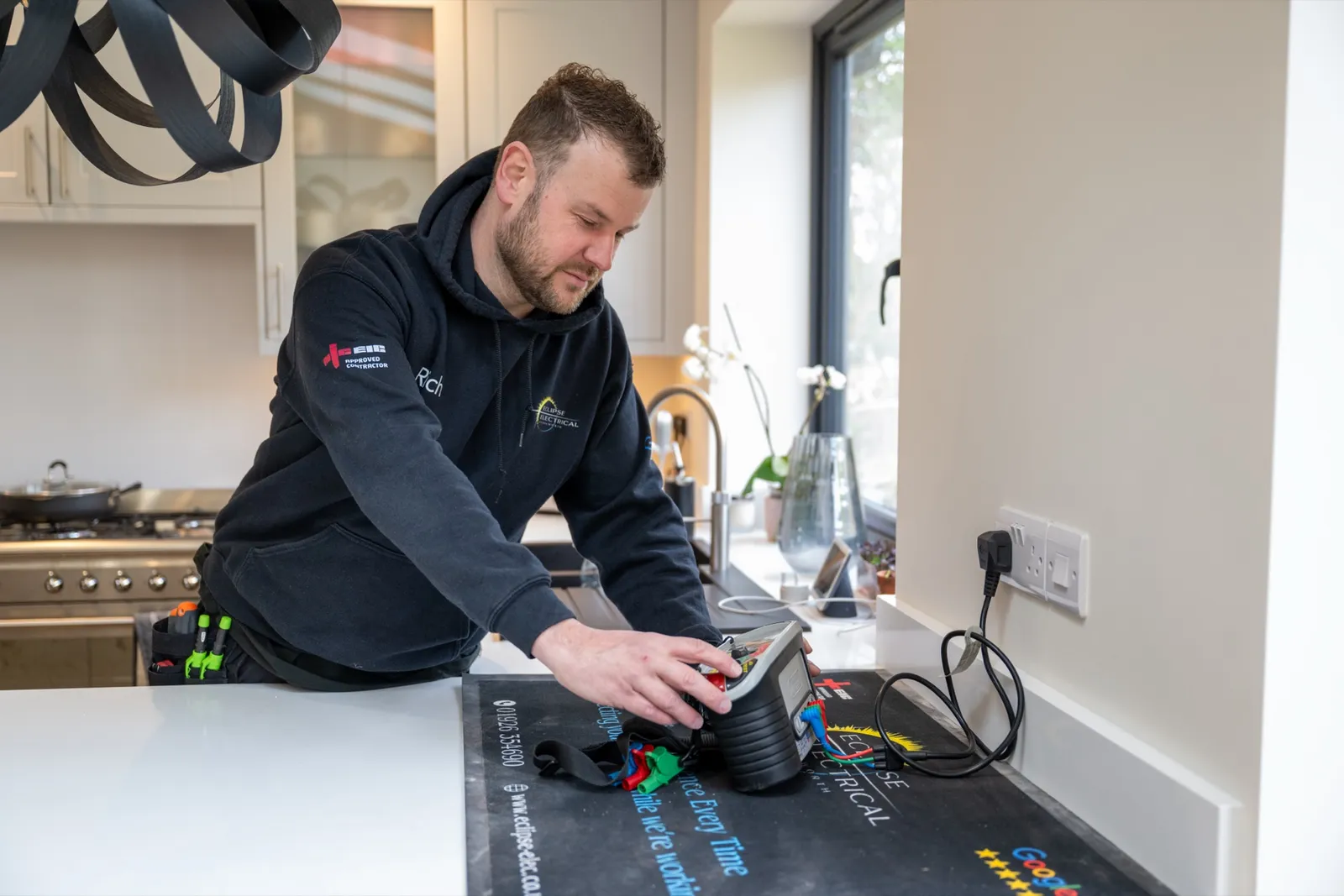
An EICR usually involves both visual inspection and electrical testing.
The electrician will typically assess:
- the consumer unit
- earthing and bonding
- wiring condition
- socket circuits
- lighting circuits
- protection devices such as RCDs
Some power interruptions are normally required during testing.
Once complete, the report will classify any observations using standard coding:
- C1 = danger present
- C2 = potentially dangerous
- C3 = improvement recommended
The electrician will then explain any recommended remedial work clearly.
What Eclipse Electrical Kenilworth Recommends
Electrical inspections are one of the best ways to identify hidden safety concerns before they become more serious problems. Whether you are buying a property, renting one out or simply unsure about the condition of your electrics, an EICR provides a much clearer understanding of how safe and up to date the installation really is.
At Eclipse Electrical Kenilworth, we carry out professional EICR inspections across Kenilworth and Warwickshire, with clear reporting, practical advice and recommendations explained properly.
Frequently Asked Questions
How often should a home have an EICR?
Many owner-occupied homes are inspected every 5 to 10 years depending on the age and condition of the installation.
Are EICRs legally required for homeowners?
No, but they are strongly recommended for older properties or before renovation work begins.
Will the power need switching off?
Yes. Certain circuits usually need isolating temporarily during the testing process.
What happens if the EICR fails?
The electrician will explain which observations require remedial work and which are recommendations only.
How long does an EICR take?
Most domestic inspections take a few hours depending on the size of the property and number of circuits.