
Quick Answer
Signs a house may need rewiring include frequent tripping, flickering lights, old fuse boards, damaged wiring, burning smells or outdated electrical systems that no longer meet modern demands. Older homes, renovation projects and properties with recurring faults should often be professionally inspected to assess whether a full or partial rewire is recommended.
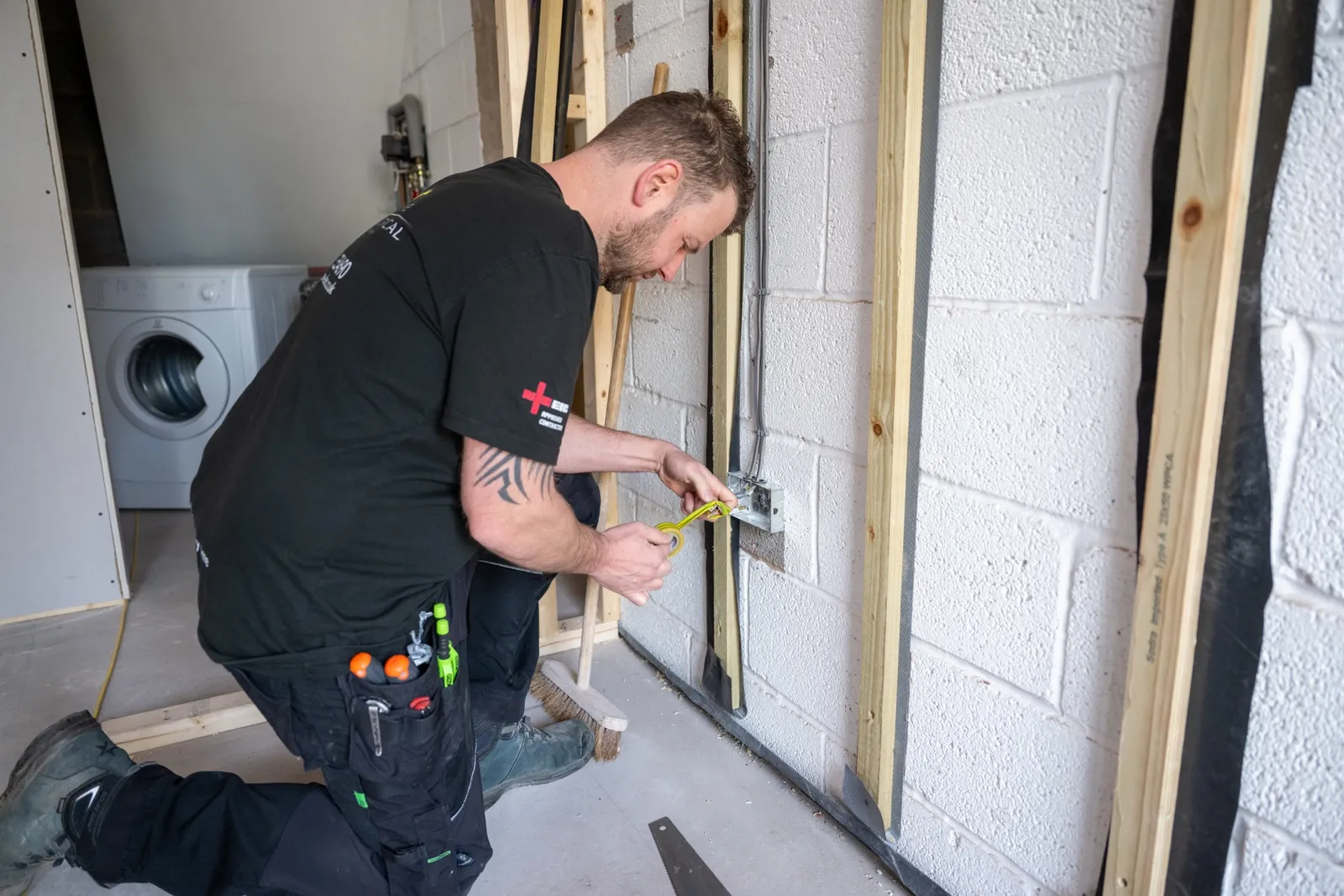
Whether you are renovating an older property or experiencing ongoing electrical problems, a professional electrical rewire inspection can help identify whether your installation remains safe and suitable for modern living.
Why Older Electrical Systems Become Problematic
Electrical installations naturally deteriorate over time. Wiring insulation can degrade, accessories become worn and older systems often struggle to cope with modern electrical demands.
Many properties across Kenilworth and Warwickshire were wired decades ago, long before homes relied on:
- home offices
- EV chargers
- high-powered kitchens
- smart home systems
- multiple televisions and devices
While not every older property needs a full rewire, there are several warning signs homeowners should take seriously.
1. Your Fuse Box Is Outdated
One of the clearest signs that a property may need rewiring is an outdated fuse board.
Older fuse boxes with rewireable fuses often lack:
- RCD protection
- RCBO protection
- surge protection
- modern circuit separation
If the consumer unit has never been upgraded, the wiring throughout the property may also be ageing.
In some cases, a consumer unit replacement may be enough. In others, further rewiring work may be required depending on the condition of the circuits.
2. Circuits Trip Frequently
Occasional tripping can happen, but repeated electrical trips should not be ignored.
Frequent tripping may indicate:
- overloaded circuits
- damaged wiring
- faulty accessories
- deteriorating insulation
- inadequate protection devices
Modern homes place far greater demands on electrics than older installations were designed to handle.
If electrical faults continue returning, it is often sensible to arrange an inspection rather than repeatedly resetting the breaker and hoping the problem disappears.
3. Lights Flicker or Sockets Feel Warm
Flickering lights, buzzing sockets or warm accessories can sometimes point towards loose connections or ageing wiring.
These issues are not always dangerous immediately, but they should still be inspected properly by a qualified electrician.
Homeowners should also look out for:
- discoloured sockets
- crackling sounds
- burning smells
- switches that feel hot
- sparking when plugging appliances in
These symptoms may indicate underlying wiring faults requiring further investigation.
4. The Property Still Has Old Wiring Types
Certain older wiring systems are more likely to require replacement.
Examples can include:
- rubber insulated cabling
- lead-sheathed cables
- fabric-covered wiring
These materials naturally deteriorate with age and may no longer provide adequate protection.
Many homeowners only discover older cabling during renovation work or EICR inspections.
5. You Are Renovating or Extending the Property
Renovation projects are often the ideal time to assess whether rewiring work should be carried out.
Once walls, ceilings and floors are opened up, access becomes significantly easier and disruption can be reduced compared to rewiring later.
Many homeowners upgrading kitchens, extensions or older properties decide to combine the project with:
- partial rewires
- consumer unit upgrades
- new circuits
- improved lighting layouts
This helps future-proof the electrical system while the renovation work is already underway.
6. You Do Not Have Enough Sockets
Older properties were not designed around modern lifestyles.
Extension leads, overloaded adapters and insufficient socket outlets are often signs that the installation no longer suits how the property is used today.
While additional sockets alone do not necessarily mean the house requires rewiring, they can indicate that the electrical system has fallen behind modern expectations.
7. Your Property Fails an EICR
An EICR inspection is one of the best ways to assess the condition of a property’s electrics.
If the report identifies:
- dangerous observations
- damaged wiring
- inadequate protection
- ageing circuits
then partial or full rewiring work may be recommended.
The electrician will explain whether improvements are urgent or whether certain areas simply no longer meet current standards.
What Eclipse Electrical Kenilworth Recommends
Not every older home requires a full rewire immediately, but recurring electrical issues should never be ignored. If your property has an outdated fuse box, ageing wiring or repeated faults, arranging a professional inspection is often the safest starting point.
At Eclipse Electrical Kenilworth, we carry out electrical rewires, safety inspections and consumer unit upgrades across Kenilworth and Warwickshire, helping homeowners understand exactly what condition their installation is in before making decisions.
Frequently Asked Questions
How often should a property be rewired?
There is no fixed timeframe, but many properties may require rewiring after 25 to 40 years depending on condition and usage.
Does an old house automatically need rewiring?
No. Some older installations remain serviceable, although they should still be professionally inspected.
Can you partially rewire a house?
Yes. Partial rewires are sometimes suitable where parts of the installation remain safe and compliant.
How disruptive is rewiring work?
Some disruption is unavoidable, although rewires are usually easier during renovation projects or before decorating.
Will rewiring increase property value?
Modern electrics can improve safety, reliability and buyer confidence, particularly in older homes.